MML ONE
Making AI output behave like footage.
Film production is a discipline of control. Today’s AI filmmaking stack isn’t: stills in one tool, video in another, and no system holding the production state. MML ONE is the tool I took from zero to public alpha to fix that — built full-stack by a team of two, and I’m one of them.
Live at mmlone.com Multimodal Media Lab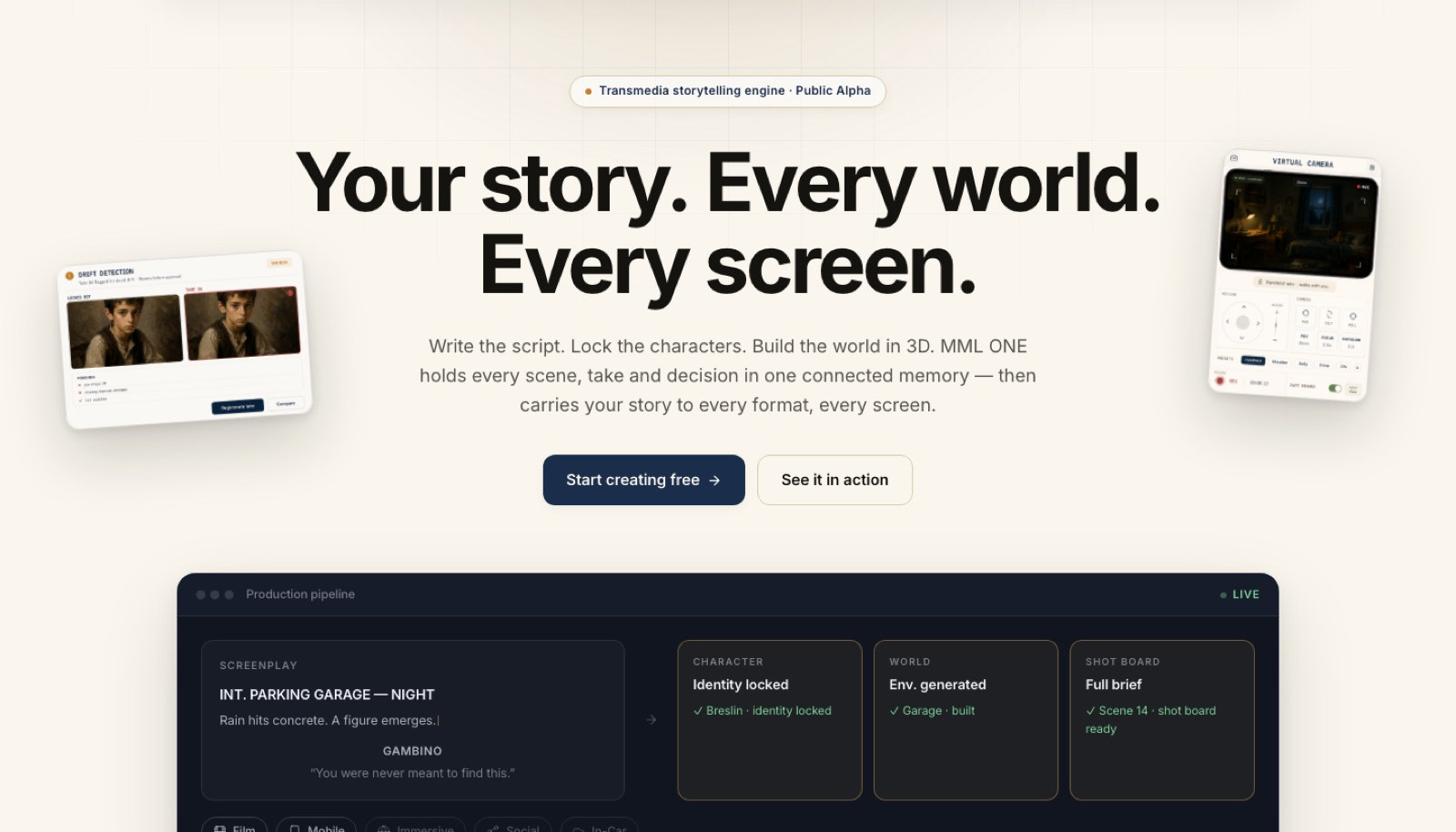
Context
Multimodal Media Lab (MML) is a Vancouver creative-technology studio working at the intersection of AI and cinema, and a partner of NextG Fund. MML ONE is its transmedia storytelling engine — script, characters, world, and cut in one project graph — currently in public alpha at mmlone.com. The platform is supported by the ElevenLabs Grants program, Convex for Startups, and the Google for Startups Cloud Program.
By the numbers
Zero to public alpha
Shipped as head of product on the founding team.
Chapter 01 · The system
Making AI behave like footage
Film production is a discipline of control — I know it from the inside, having produced Misty Northern City, a festival-winning Toronto short, in 2024. AI filmmaking today has none of it: stills come out of Midjourney, video takes out of Seedance or Kling, references pile up by the hundred — and no system holds the production state together. MML ONE is that system: one project graph where every generation — text, image, or video — is a pipeline stage with explicit inputs, a review state, and a scoped re-roll.
The model
Three locks against randomness
-
Scoped re-rolls carry the weight.
Circle what’s wrong on a frame, regenerate just that — every upstream decision stays locked. This is where the −30% rework number comes from.
-
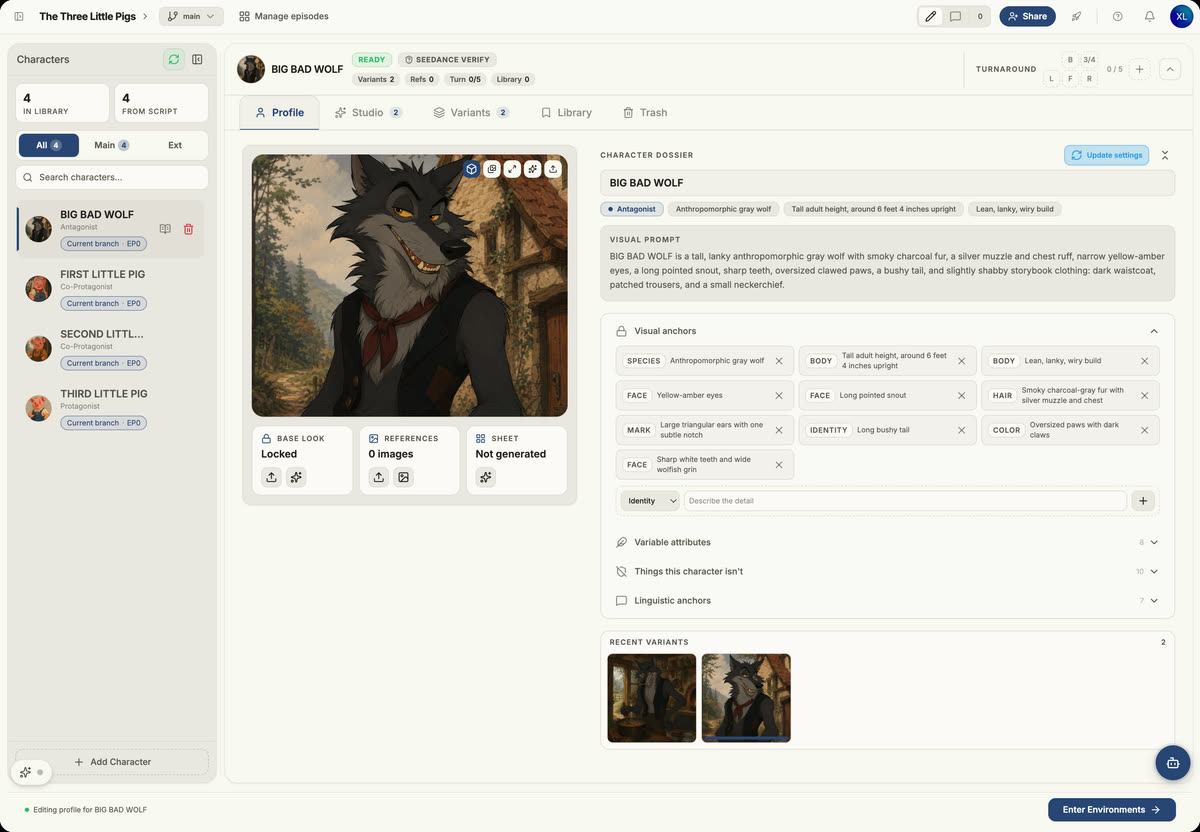
Character Studio locks identity.
An approved character’s bone structure, gait, and voice carry across every scene, costume, and generation model.
-
Review states do the quiet work.
Every artifact is in review or approved, so a project reads as a record of decisions — not a pile of generations.
Deep dive 01
Version control for a story
“Behave like footage” has a logical endpoint: if generations are footage, a project needs version control. Branch center is the deepest system in MML ONE — a full branching model for a story and every asset that story drives.
-
A checkpoint is a commit.
Every content change lands as a checkpoint, and the system identifies what changed on its own, scoped to the module: Screenplay · 7 episodes, Storyboard · revision 15, Key Scenes · revision 7. Nobody writes a commit message — the diff writes itself.
-
A branch is a parallel draft.
A scriptwriter works on their own branch — three checkpoints ahead of main, eight behind — and their changes come back through a reviewable merge request. Collaboration stops being a chat thread that ends in “use this version.”
-
There was nothing to copy.
Version control for code is a solved discipline. For a story — where one screenplay edit ripples into boards, key scenes, and canvas — there was no prior art. What counts as a change, at what scope, is a design decision I had to invent.
Deep dive 02
A film set in the browser
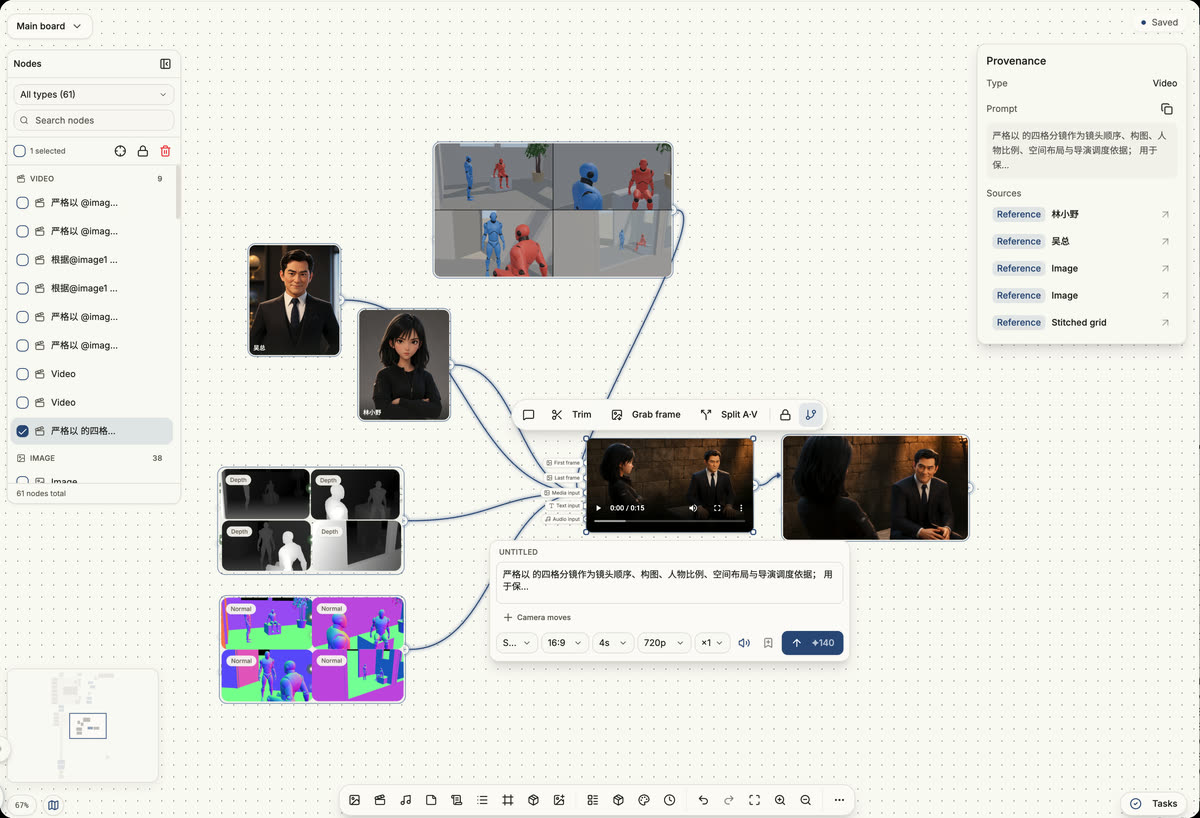
The 3D Stage is a previsualization set inside the pipeline: walls, doors, windows, and roofs to block a set; key and fill lights; mannequins for staging; a virtual camera you can drive from a phone; a 24 fps timeline with shot tracks; Export at the end.
I’ve built 3D tooling before — the Unity work and the VR research behind my IEEE VR 2026 paper. The constraint here is inverted: the user is a filmmaker with zero 3D training who has to block a scene in minutes. So the toolset speaks a film set’s vocabulary — walls, doors, a cutaway, a floor plan — not a 3D suite’s.
Chapter 02 · The scope
Seventeen modules, one person
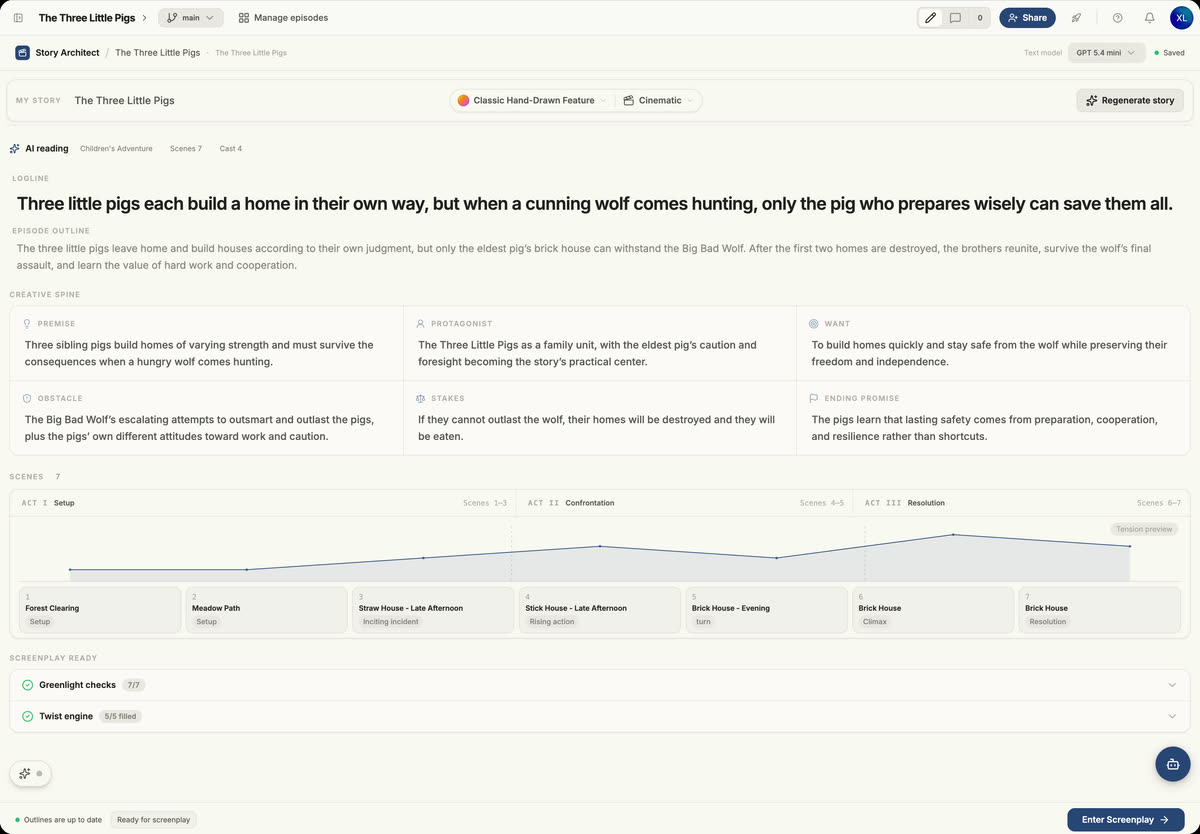
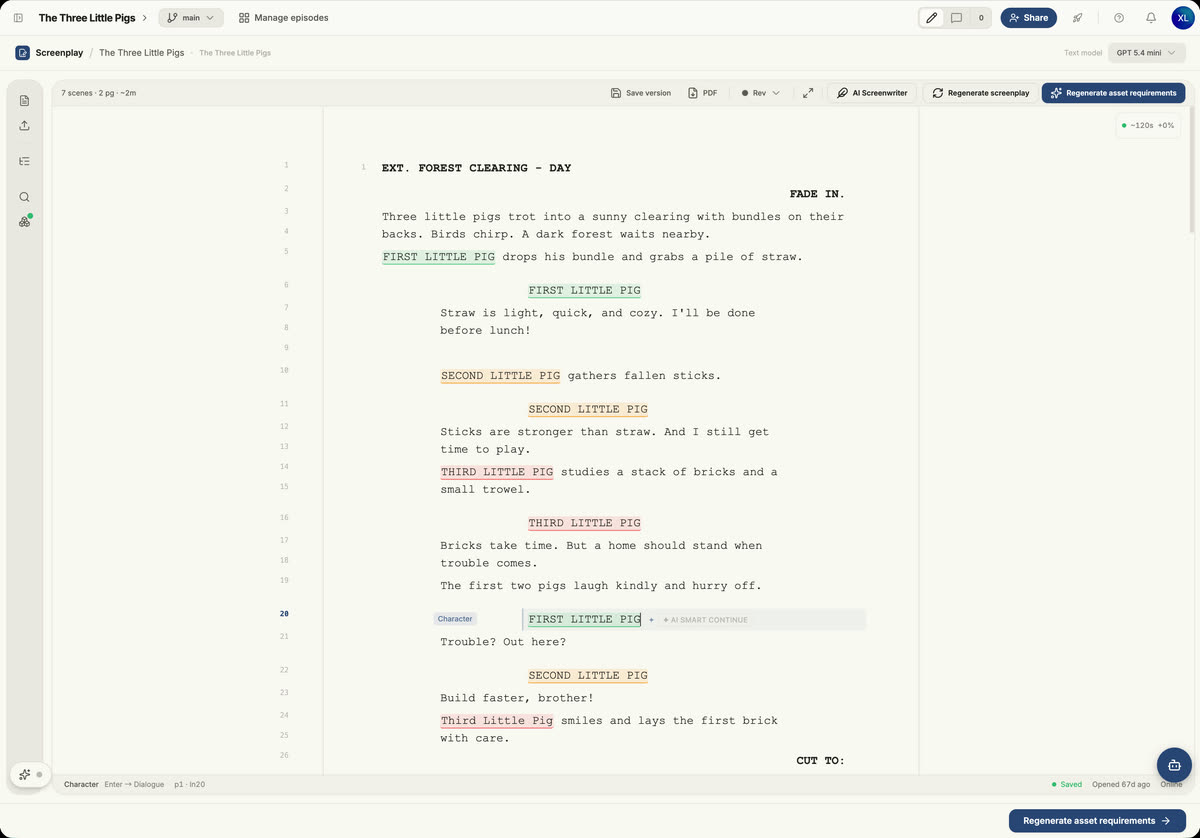
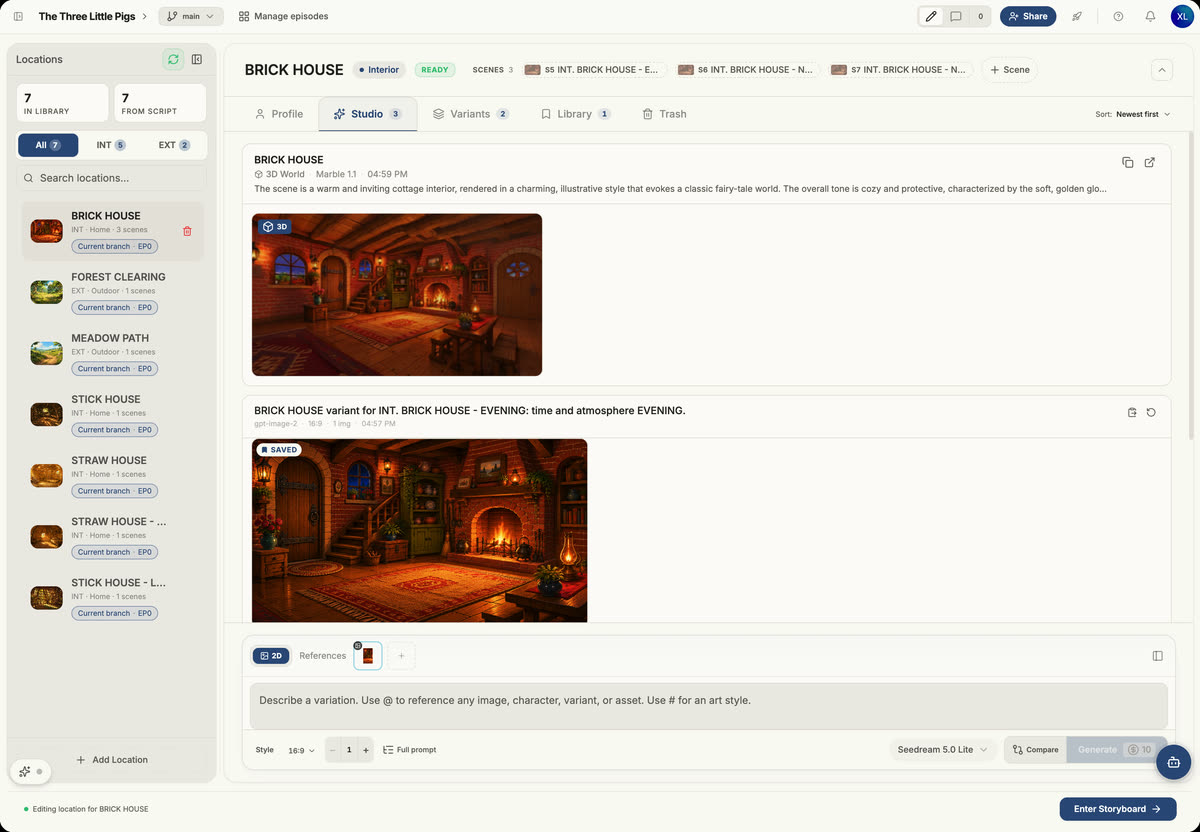
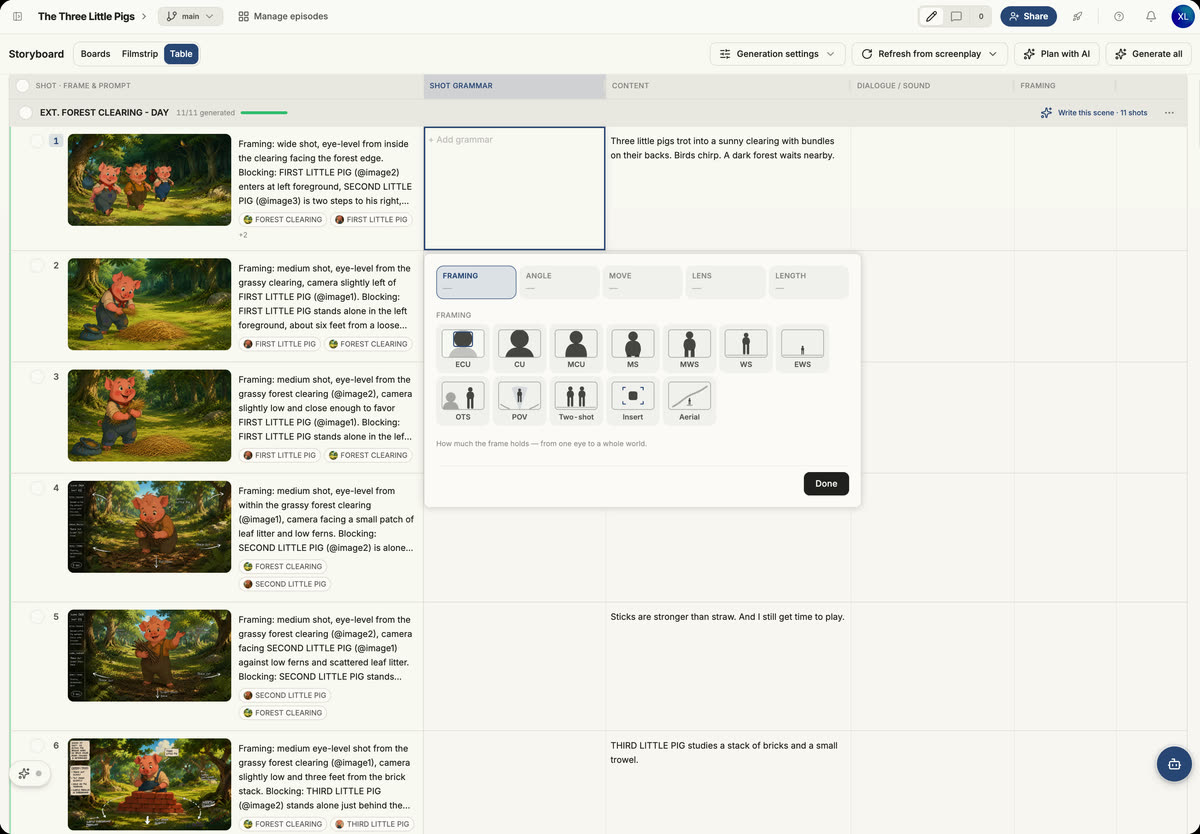
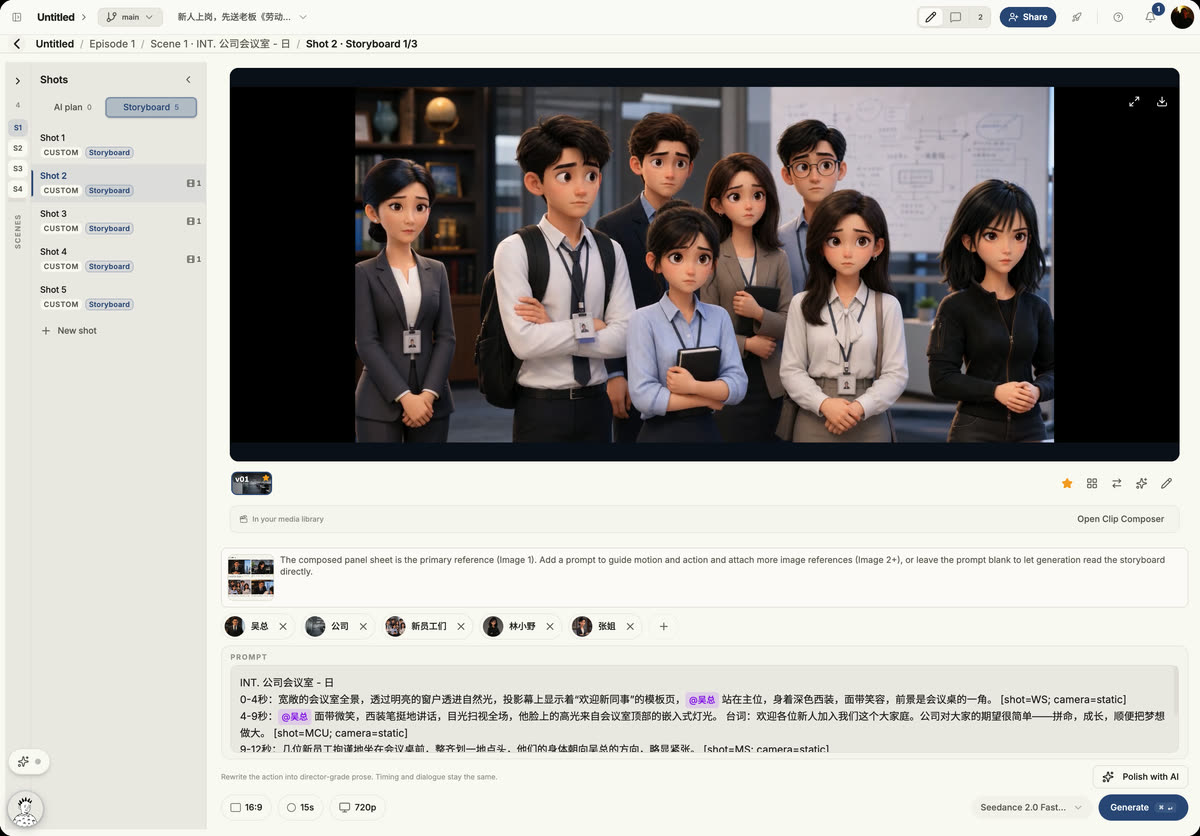
MML ONE isn’t a generator with a settings page. It’s a production house: seventeen modules across seven pipeline stages, plus the infrastructure underneath — branching, an action queue, history. Every one of these screens crossed my desk: as a problem statement, as a Figma file, and most of them as shipped code.
Stills
Around the platform
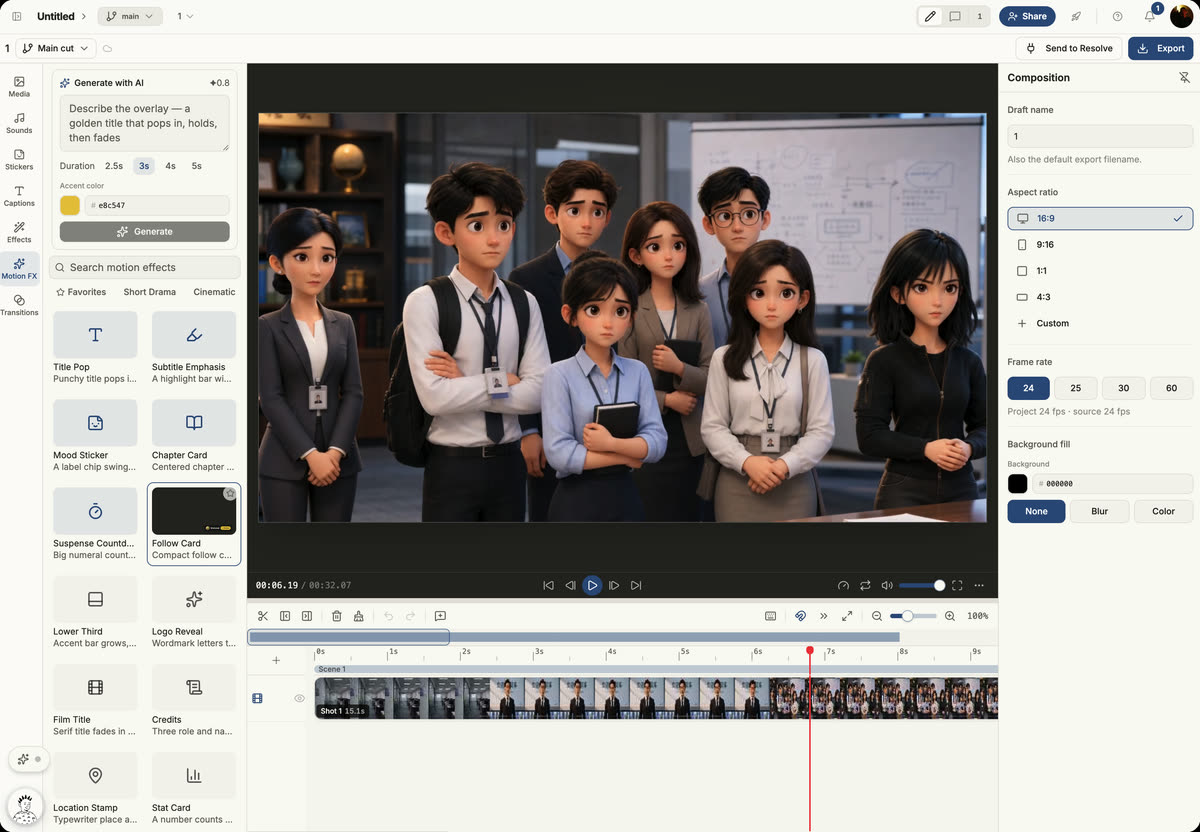
Frames from the tool itself, one per module — this strip grows as the alpha does.
Chapter 03 · The job
What Head of Product means here
On a founding team the title is shorthand for everything the product needs that nobody else owns. Concretely:
Every week I run a build-test-learn loop with 5–10 creators from the MML ONE community. They work in the current build while I watch where the pipeline holds and where it fights them; findings go straight into cut-or-keep calls for the next release. Because I also write the code, the distance from observed friction to shipped fix is a to-do list, not a planning cycle.
The testing network behind that loop — weekly creators plus 16 pilot studios — is a program I built and run, not a pool I inherited.
MML ONE is built by a team of two, and I’m one of them — from Figma design to full-stack code: TypeScript, React, Next.js, and Tailwind in front, Convex behind. The same person who designs a review state ships it end to end, so nothing gets quietly simplified between mockup and API. For an AI product that matters double: latency, streaming, and half-finished generations are the real material of the interface, and the design accounts for what a model actually returns, not what a static mock wishes it returned. The rest of my web work at MML is its own case study →
The business side
The pitch is a product too
I drive the product side of MML ONE’s fundraising and business development — the narrative, the demos, and the numbers behind them.
-
The narrative lands.
The pitch narrative and product demos I own helped land Google for Startups, Convex for Startups, and an ElevenLabs grant — and the same story carries the fundraise conversations.
-
Partners shape the roadmap.
Product lead for strategic partnerships with World Labs, Tencent, and ByteDance, plus an Android XR program with XREAL — I represent the product in partner conversations and turn partner requirements into roadmap.
-
The economy is product work.
Every generation is metered in credits, and the pricing and consumption model behind that meter is mine. The proof the story sells: paying subscribers on zero marketing spend.
The honest part
What I cut, and what still fights me
The pattern I now trust
Treat every generative step as a stage with explicit inputs, a review state, and a scoped re-roll — and a nondeterministic model becomes something a discipline of control can use.