Research · Simon Fraser University · IEEE VR 2026
Scaled Mouse: precision 3D docking in seated VR
I designed and built a hybrid mouse-and-VR technique for precise 3D docking, validated it in two controlled studies with 40+ participants, and published it as first author at IEEE VR 2026 with Bill (Di) Zhao and Prof. Wolfgang Stuerzlinger.
 Simon Fraser University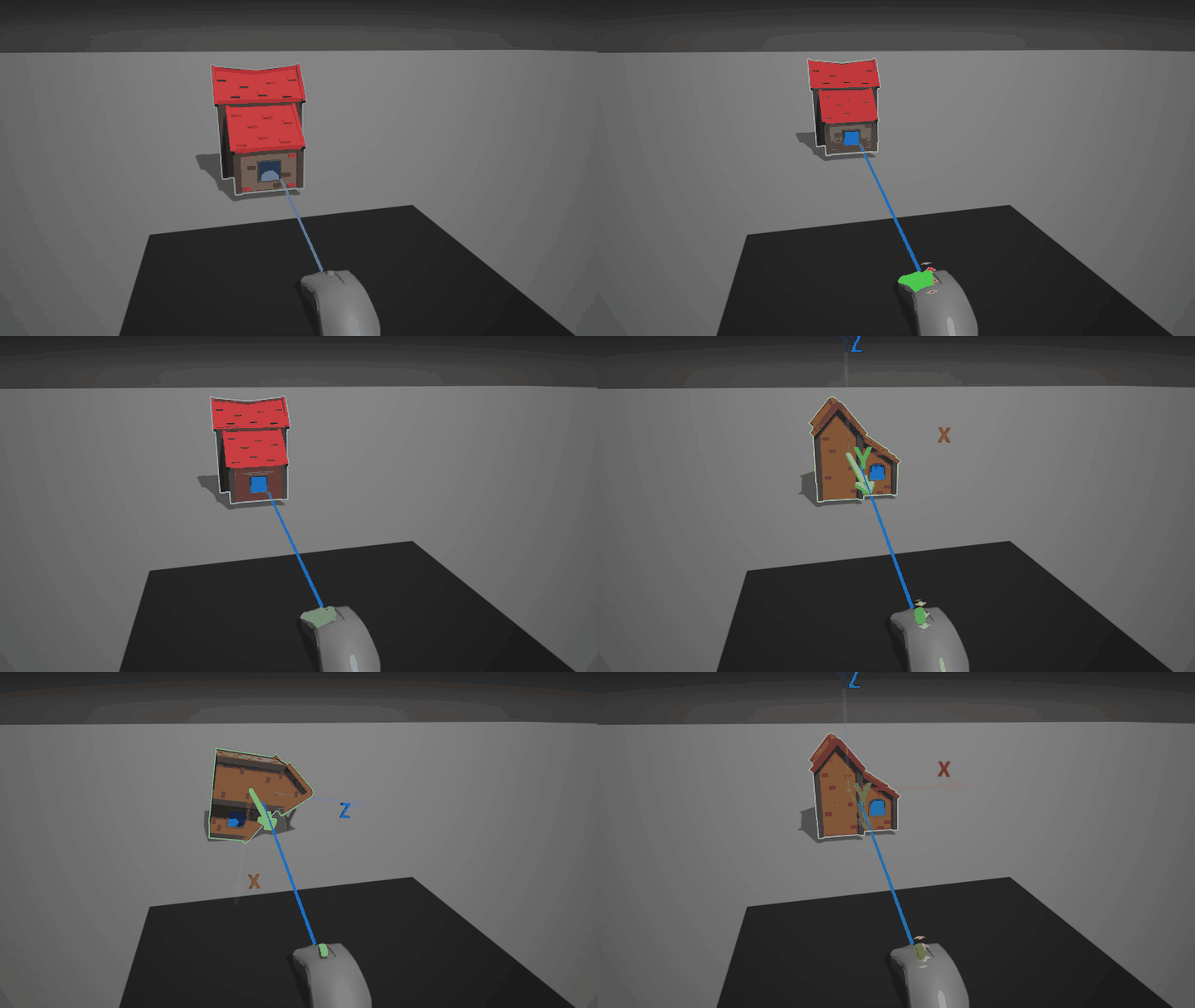
The question: why controllers fail at precision
Docking, the act of placing an object at an exact position and orientation in 3D, is one of the most demanding tasks in VR. Standard controllers make it harder than it needs to be. Your hand hovers in mid-air with nothing to brace against, so every tremor transfers straight into the object you are trying to place, and holding a steady pose tires the arm quickly.
I focused on seated VR because a better answer was sitting in plain sight. Desk-based VR work happens in a chair with a real desk within reach, which means a mouse is physically available. The question became concrete: could an input device refined over decades for precision beat the controllers that ship as the default for 3D work?
The technique: a scaled mouse for 3D docking
Scaled Mouse is a hybrid technique: you stay inside the headset while your hand works on the desk. The desk supports the wrist, the mouse provides fine motor control, and a scaled mapping translates small physical movements into 3D manipulation.
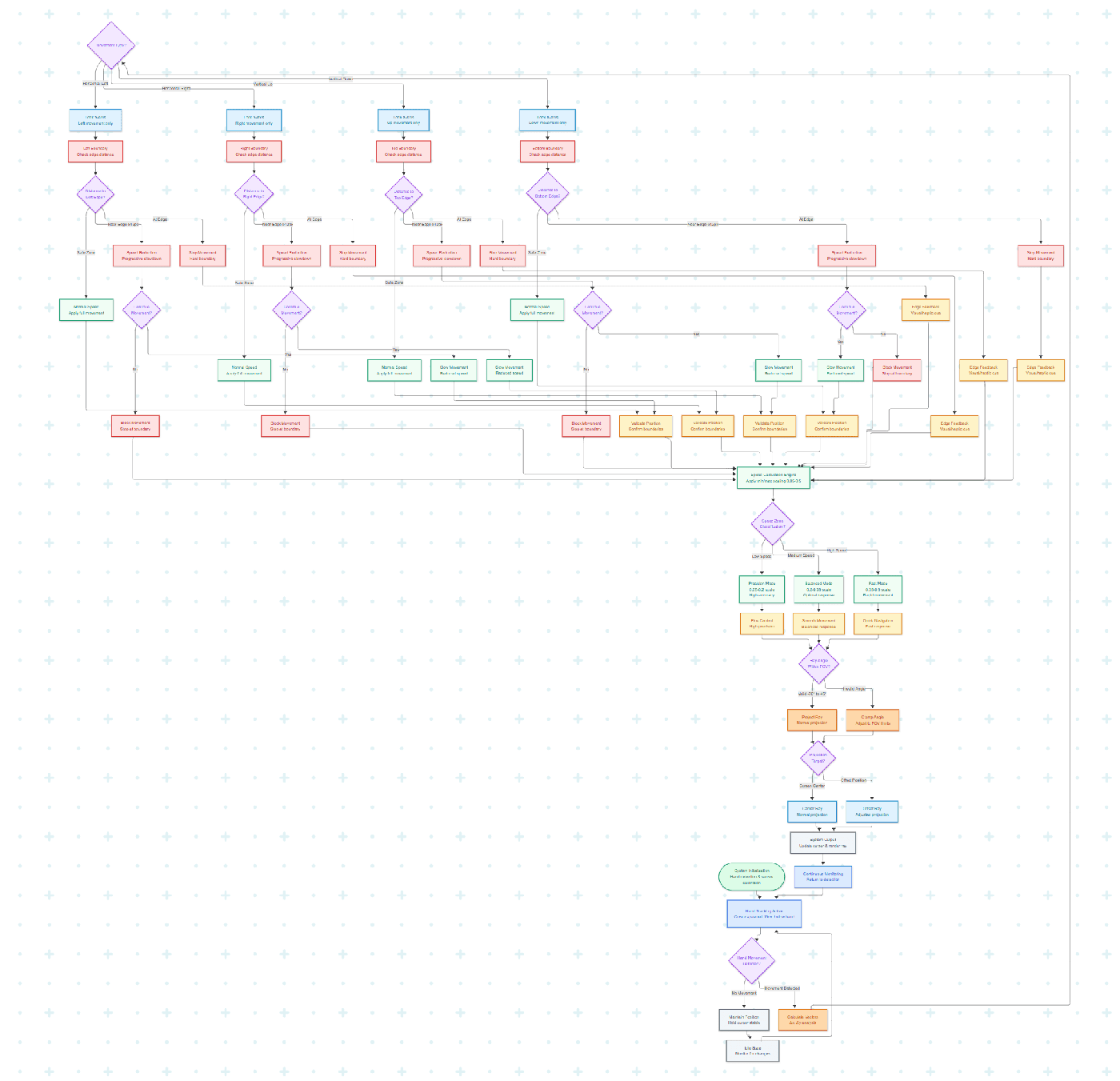
Mapping a 2D device into a 3D task raises real design questions, and I answered each one as both the interaction designer and the engineer who had to make it feel right in the hand.
Displacement
Depth
Scaling
Building the evaluation system in Unreal Engine
I implemented the technique as a working evaluation system in Unreal Engine, built end to end by me. That covered the docking tasks, the comparison conditions, and the instrumentation that logged every trial.
A controlled study is only as trustworthy as its apparatus, so I treated the system like a product. It had to behave identically for every participant and stay out of the way of the thing being measured. Building it myself meant the technique and its test harness were designed as one system.
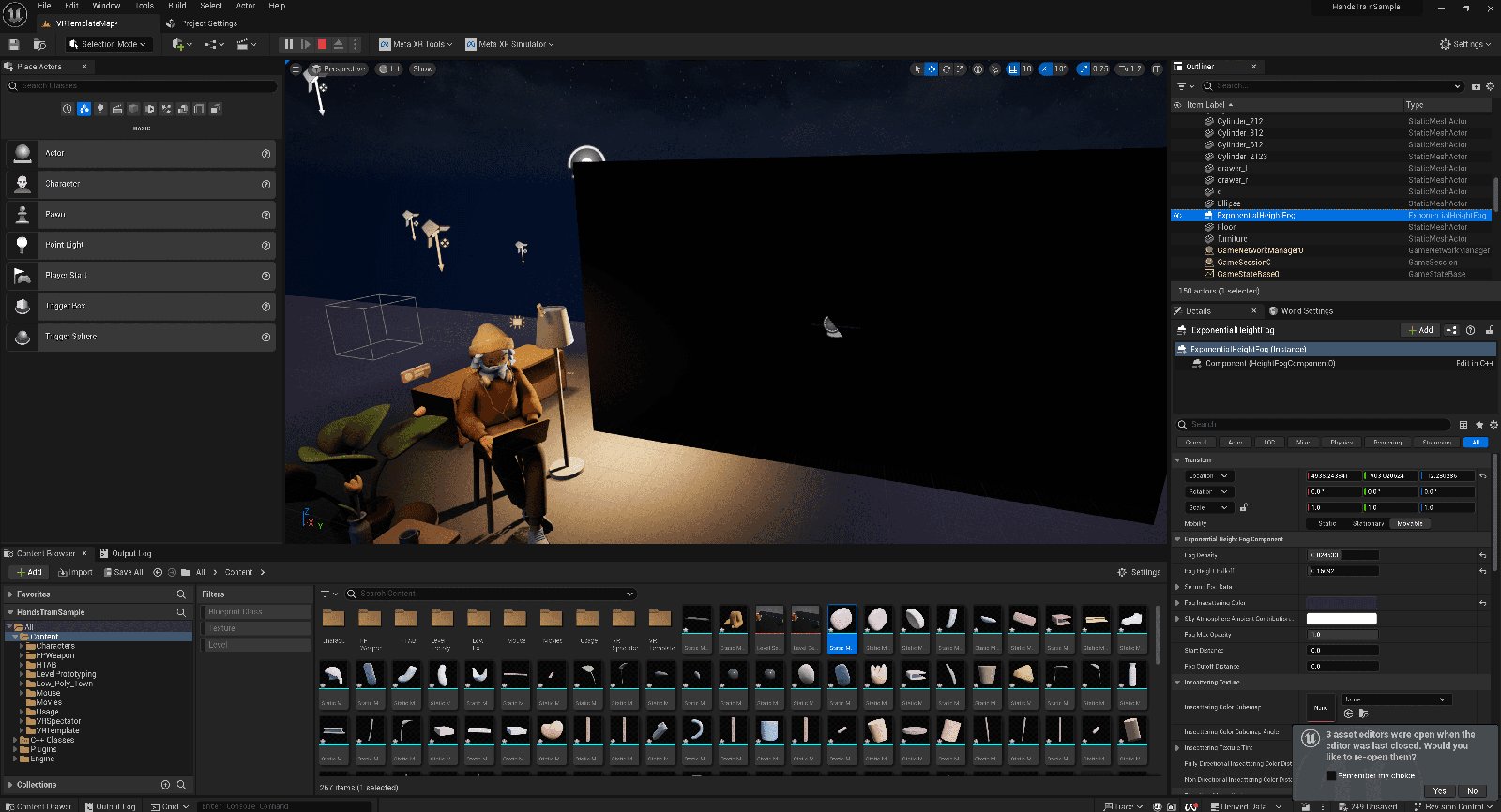
Working inside the lab
I built the apparatus and ran the day-to-day work myself, but this was lab research, not an independent project. It sat inside Prof. Wolfgang Stuerzlinger's lab at Simon Fraser University, with Bill (Di) Zhao as co-author on the paper. Stuerzlinger advised the project and reviewed the study designs before each round of participants; Zhao's co-authorship reflects a real hand in shaping the technique and the paper that came out of it. Two controlled studies, reviewed and run inside that structure, is a different thing from one person working alone in a room.
Two studies, 40+ participants
I validated the technique in two controlled studies with more than 40 participants in total, using standard VR controllers as the baseline.
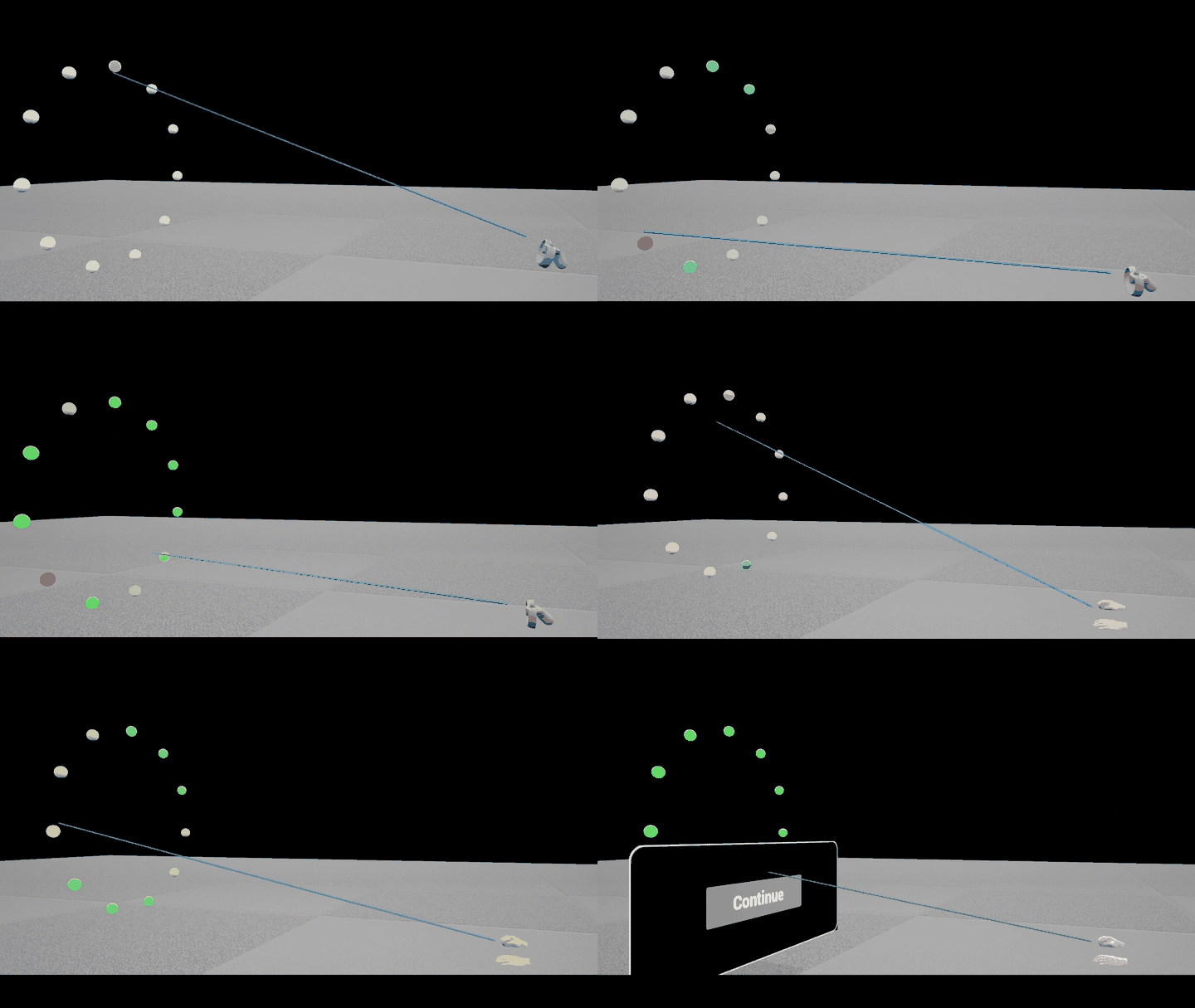
The results were consistent across both studies: participants docked objects with higher precision using the scaled mouse, and they preferred it over the controllers.
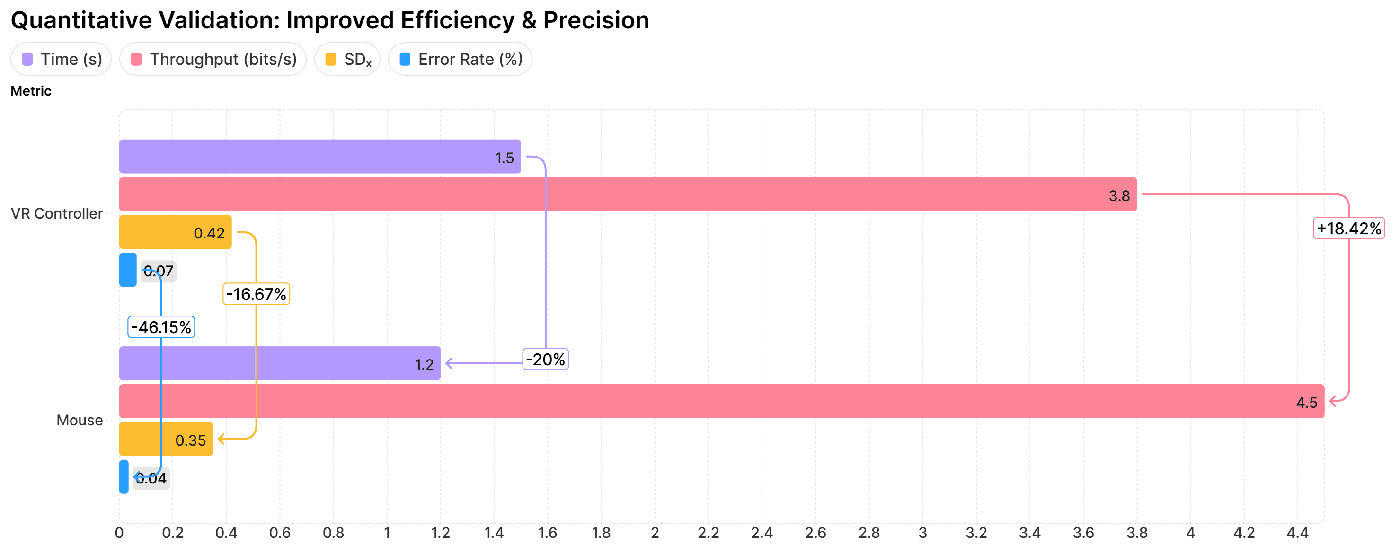
The preference result matters as much to me as the precision result.
A technique that wins on accuracy but feels wrong will not get adopted. This one won on both, which is what separates a lab curiosity from something worth building on.
The work in numbers
Publication: first author at IEEE VR 2026
The work was published at IEEE VR 2026, the premier international conference for VR research, with me as first author, Bill (Di) Zhao as co-author, and Prof. Wolfgang Stuerzlinger advising.
This project shows how I work at full width: I framed the question, designed the technique, built the system, and ran the studies inside a structure that reviewed the work at every stage.